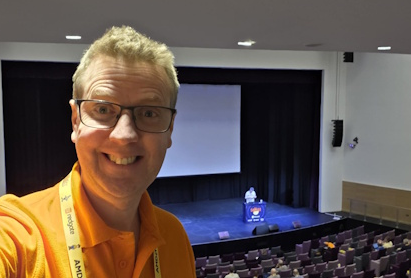
If you’d told me three years ago that I’d be organising my own data conference, I’d probably have laughed at you.
Yet here I am, spending my evenings and weekends organising venues, talking to sponsors, finding speakers, building websites, and working through a seemingly endless list of things that need doing.
And the strange thing is, I’m really enjoying it. Well, most of the time.
So how did I get here? Why did I decide to create Data Pulse, and what exactly am I hoping to achieve?
To answer that, I need to go back to 2023.
Where it all started – SQLBits 2023
My journey into the data community really began at SQLBits 2023, held at the ICC Wales in Newport.
I’d been working with SQL Server for years, but there was still an enormous amount I wanted to learn. SQLBits seemed like the perfect opportunity to develop my technical knowledge, hear from experts, and discover what other people were doing.
And it certainly delivered! The sessions were fantastic, the venue was impressive, and I came away having learned a huge amount.
But what really stood out was the atmosphere.
I was surrounded by people who shared my interests. People who understood the challenges I faced at work, got excited about the same technologies, and were perfectly happy spending their free time talking about databases.
I could strike up a conversation with a complete stranger, and within minutes we’d be chatting away as though we’d known each other for years.
It was brilliant! I hadn’t just discovered a great technical conference. I’d discovered a community and I wanted more of it.
The orange shirt
When I arrived at SQLBits in 2023, I spotted a familiar face at the registration desk.
It was Marc Kent, someone I’d worked with many years earlier. We had a good catch-up, and Marc suggested I should consider volunteering. I wasn’t convinced at the time, so lets jump ahead to 2024.
At SQLBits 2024 in Farnborough, I’d attended the Thursday and Friday as a regular attendee. This is when Marc introduced me to the wonderful Steph Martin, who was leading the volunteers at the time.
They were short of people for the Saturday and asked whether I’d help.
Eventually, I caved, and I’m so very glad I did. Volunteering turned out to be one of the best decisions I’ve ever made.
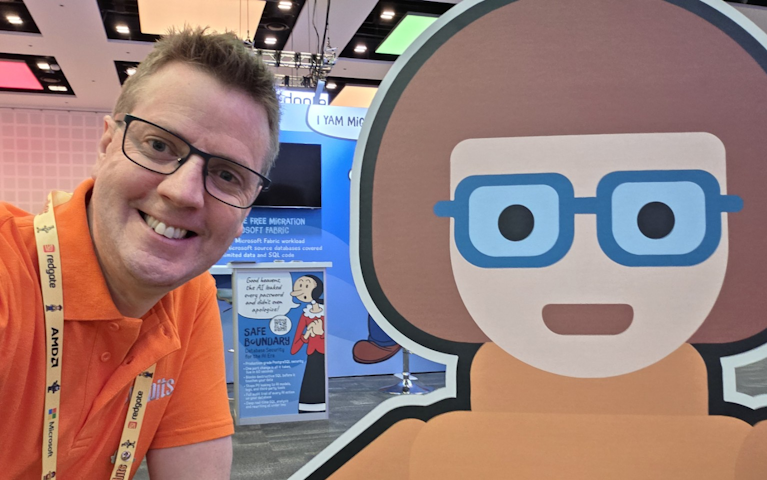
The other volunteers were fantastic. Everyone was friendly, helpful, and there for the same reason, they wanted to contribute to something special.
It was fascinating to see how a conference worked behind the scenes, particularly after spending the previous two days experiencing it as an attendee. But one of my favourite things was putting on that orange volunteer shirt.
There’s something about wearing it that almost gives you permission to approach absolutely anyone. You can walk up to a complete stranger and ask whether they’re enjoying themselves, need directions, or could use some help.
Sometimes it’s a quick exchange. Other times, it leads to a really interesting conversation. Either way, you’re helping someone have a better experience.
I was hooked. After that, I wanted to volunteer at more events. Another opportunity came about through a chance conversation at an Advancing Analytics event in London.
I got chatting to Nikki Kelly at the registration desk, who mentioned she was from Glasgow. I told her I was planning to visit Glasgow for an event called Data Scotland.
It turned out Nikki was one of the organisers and also lead the volunteers.
What are the chances?
I mentioned that I’d enjoyed volunteering at SQLBits and would happily help if they needed anyone.
And that’s how I ended up volunteering at Data Scotland. I’m beginning to think registration desks have a lot to answer for.
Could I start something myself?
By this point, I’d started wondering whether I could do something to support the community myself. I’d experienced how enjoyable these events could be, and I wanted other people to experience that same excitement.
My first thought was to start a local SQL Server user group. A conference wasn’t even on my radar. Organising something on that scale seemed like an enormous undertaking.
I reached out to Mikey Bronowski, who runs the Southampton Data Platform and Cloud user group, to ask for his thoughts. Mikey was incredibly helpful and offered some valuable advice, but the timing wasn’t ideal.
Several user groups were struggling to attract people to in-person meetings. Southampton was relatively close to me, as was Reading, where Coeo also hosted a user group at its offices. I’d attended one of the Reading events and thought it was excellent, but they too were finding it difficult to maintain regular meetings and attendance.
I wasn’t convinced that creating another user group in the same area would help matters. So I put the idea to one side.
The desire to do something for the community was still there, though. I just hadn’t worked out what that something would be.
Discovering the hallway track
Over the following years, I continued attending conferences and community events whenever I could. SQLBits, SQL Konferenz in Germany, Redgate events, and others.
But something interesting started happening. My priorities began to change.
When I first attended SQLBits in 2023, I was primarily interested in the technical sessions. I wanted to learn as much as possible, and I’d carefully work out which presentations to attend.
Don’t get me wrong, I still love a good technical session. There’s always something new to learn, and I regularly come away from conferences with pages of notes and a list of things to investigate.
But increasingly, I’ve found myself spending more time on what people call the hallway track. Essentially, it’s everything that happens between the sessions.
The conversations over coffee (and pastries!). The discussions over lunch. Catching up with people you’ve met at previous events. Meeting someone new and discovering they’re dealing with exactly the same problems you are.
Some people call it networking, although I know that word can make people uncomfortable. To me, it’s simply about meeting like-minded people and making connections. And those connections can be incredibly valuable.
You might meet someone who helps you solve a frustrating problem at work, introduces you to a new technology, or helps you find your next job. Or perhaps someone who gives you the encouragement you need to organise your own conference.
Funny how that works!
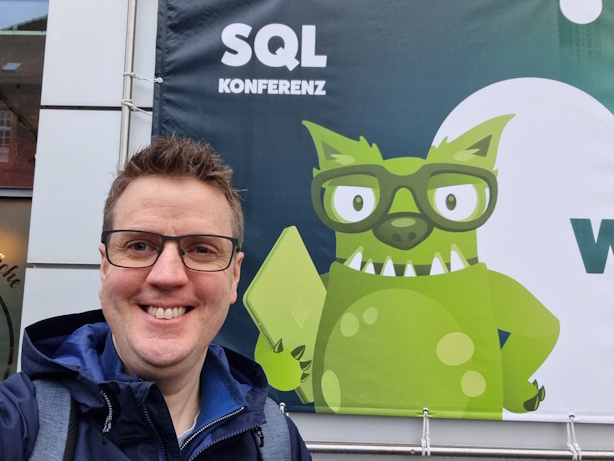
One event that’s become a particular favourite of mine is SQL Konferenz in Germany. Attending a conference outside the UK was initially a little outside my comfort zone, but I’m so pleased I went.
The venue is great, the sessions are excellent, and the people are wonderful. But what really makes it special is the community atmosphere.
It’s a fantastic opportunity to catch up with old friends, make new ones, and meet the vendors supporting the community. I always come away feeling motivated, inspired, and glad I made the effort.
I’ve had similar experiences at Redgate’s events, from their smaller gatherings to their larger summits. Redgate has been a fantastic supporter of the data community, and I’ve always enjoyed speaking with their employees. They’re knowledgeable, approachable, and genuinely interested in the challenges their customers face.
Their insights into how AI is changing our industry have been particularly interesting, and I regularly follow their reports and presentations.
All these experiences helped shape my understanding of what makes a great event. It’s not just about the technical content, important though that is. It’s about the people.
A reminder that life is short
In May 2026, something happened that changed my perspective on a few things. A very close friend of mine, Stuart McIntosh, passed away unexpectedly.
I’d known Stuart for many years. We’d worked together a long time ago and remained good friends ever since. I knew his family well, and we’d shared some fantastic adventures.
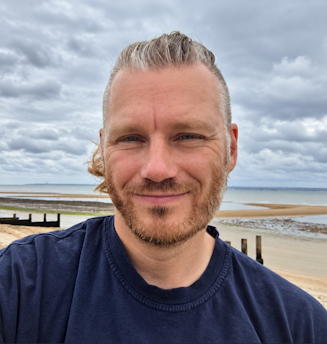
We’d canoed along the Caledonian Canal, walked the West Highland Way, and climbed mountains including Snowdon and Ben Nevis.
We’d made a lot of memories together.
It was Marc Kent, the same Marc who’d encouraged me to volunteer at SQLBits, who contacted me with the news.
Stu’s death came as an enormous shock. It hit me much harder than I’d expected, and I found myself reflecting on life and the choices I’d made.
I know it sounds terribly cliched, but one day I was sitting in my home office thinking about all the things I’d considered doing but never actually pursued.
One of those things was organising a conference. By this point, I’d half-jokingly entertained the idea a few times.
I thought it could be a lot of fun. I’d met some wonderful people through the community, seen how events worked from both sides, and had plenty of ideas about what I might do myself.
But organising an entire conference? That was a pretty ridiculous idea, wasn’t it? It would be an enormous amount of work, with plenty to learn and absolutely no guarantee that anyone would be interested.
But sitting there, reflecting on everything that had happened, I found myself asking a different question.
Why not?
Other people had done it. Why couldn’t I?
I didn’t need to have all the answers immediately. I didn’t even need to know whether it would succeed. I could just give it a go and see how far I got.
And that’s really where Data Pulse began.
From an idea to an actual conference
Of course, deciding to organise a conference and actually organising one are two very different things.
My first priority was to find out whether there was even an appetite for another data community event in the UK.
I reached out to several people I’d come to know and respect through the community, including Jess Pomfret, Ben Weissman, Daniel Hutmacher and Craig Porteous.
All four had considerable experience with community events, and they were incredibly generous with their time and advice.
Those conversations gave me the confidence to keep going.
Initially, my plan was to organise a Data Saturday event. Data Saturday is an established community-driven initiative, and it seemed sensible to take advantage of something that already existed. Why reinvent the wheel?
There was already branding, a website structure, a code of conduct, and a framework for running an event.
But as I started developing my ideas, I realised the format wasn’t quite what I wanted. For one thing, the name rather suggests the event should take place on a Saturday! I didn’t necessarily want to commit to that.
Data Saturday events also tend to be associated with a particular location. That works brilliantly for those events, but I wanted the flexibility to move mine around in future.
I didn’t want to tie it permanently to one town or city, and calling it Data Saturday UK felt a little too ambitious.
More importantly, my vision for the event was evolving. I wanted to build something with its own identity. Something that could grow and adapt over time.
And eventually, Data Pulse was born.
The reality of organising Data Pulse
I won’t pretend the journey has been straightforward.
It’s been a rollercoaster.
When I first decided to do this, I was incredibly excited. Ideas were coming thick and fast, and I couldn’t wait to get started. Then I began to realise just how much work was involved.
Finding a venue. Working out budgets. Building a website. Finding sponsors. Attracting speakers. Promoting the event. Sorting out registration. And about a hundred other things I’d never even considered.
There was a point when I genuinely felt out of my depth.
I decided to reach out to someone I knew for help finding and securing a venue, and that gave me another boost of confidence.
Suddenly, things started moving again.
There have still been plenty of days when I’ve sat at my desk wondering what on earth I’ve got myself into.
But then I’ll tick another task off the list, have a productive conversation with a potential partner, or receive an encouraging message from someone in the community, and the motivation comes flooding back.
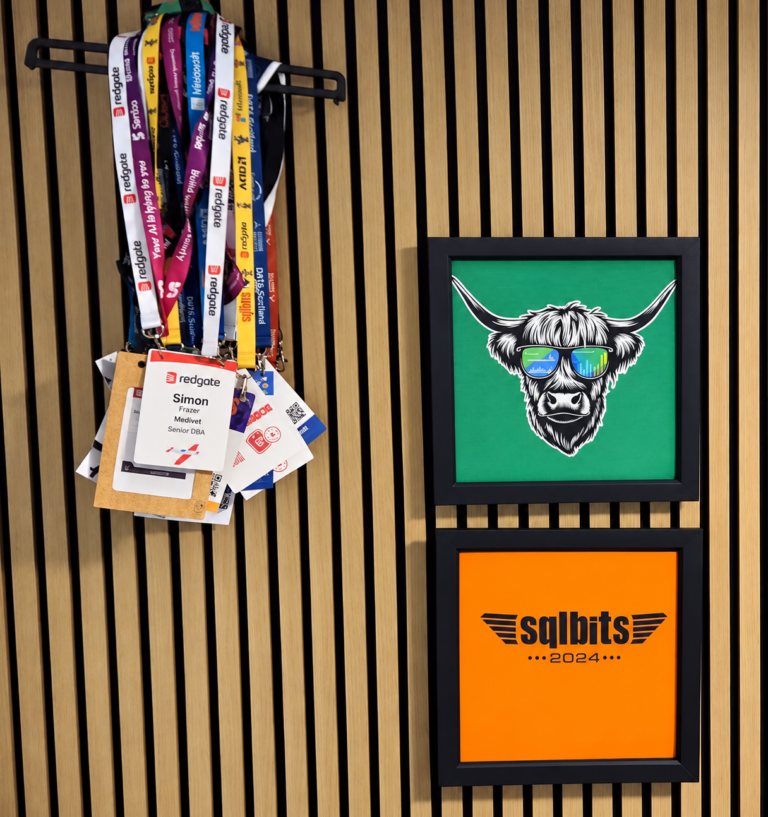
One of my biggest challenges has actually been keeping my own ideas under control. The more I work on Data Pulse, the more possibilities I see.
I’ve got ideas for things I’d love to introduce, ways to improve the experience, and directions the event could take in future. But I’ve had to keep reminding myself of something important.
If I don’t get year one right, there won’t be a year two.
And I really want there to be a year two. So for now, it’s about finding the right balance.
What I want Data Pulse to be
Data Pulse is a community event.
It’s not something I’m organising to make a profit, and I have no ambitions to turn it into some enormous commercial conference.
I simply want to create an event that people enjoy attending.
An event with excellent technical sessions, knowledgeable and approachable speakers, and plenty of opportunities to meet other people working in data.
I want attendees to feel welcome and included, whether they’re seasoned conference-goers or walking into their very first community event.
I want speakers to enjoy sharing their knowledge.
I want our partners to feel that supporting the event was worthwhile.
I want volunteers to have the same fantastic experience I had when I first put on that orange shirt.
And, if I’m being completely selfish, I’d quite like to enjoy myself too!
Most importantly, I want Data Pulse to be sustainable.
It doesn’t need to be the biggest conference.
It just needs to work.
If we can create something that people value, something that brings the community together and can continue year after year, I’ll be delighted.
So, where are we now?
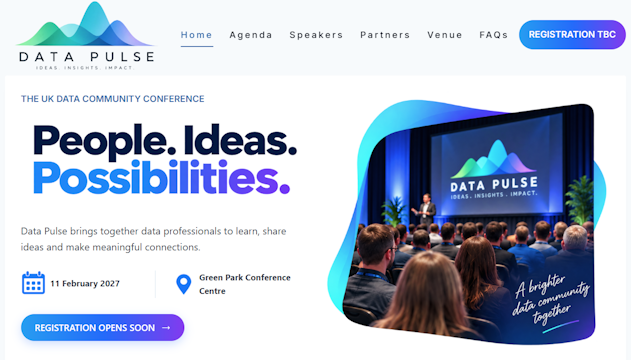
As I write this in October 2026, Data Pulse is becoming very real.
What started as a slightly ridiculous idea while sitting in my home office has turned into an actual event. There’s still an enormous amount to do, and I’m sure there will be plenty more moments when I question my own sanity.
But I’m excited about what we’re building.
And I’m incredibly grateful to everyone who’s offered advice, encouragement, introductions, or simply taken an interest in what I’m trying to achieve.
One thing I’ve learned over the past few years is just how generous the data community can be.
People give up their time to speak, volunteer, organise events, share their knowledge, and help others succeed.
I’ve benefited enormously from that generosity. Now I’d like to give something back.
If, at the end of our first Data Pulse, people walk away having learned something new, made a few connections, enjoyed themselves, and perhaps even found a little inspiration to try something different, I’ll consider it a success.
And who knows? Maybe someone attending Data Pulse will have the same experience I had at SQLBits in 2023.
Maybe they’ll discover a community they didn’t know existed. Maybe they’ll decide to volunteer at their next event. Or perhaps they’ll go home with a slightly ridiculous idea of their own.
Three years ago, I went to SQLBits to learn about databases. I came away having discovered something far more valuable: a community.
Data Pulse is my way of saying thank you.